Showing posts with label Kathryn Craft. Show all posts

Tuesday, February 11, 2014

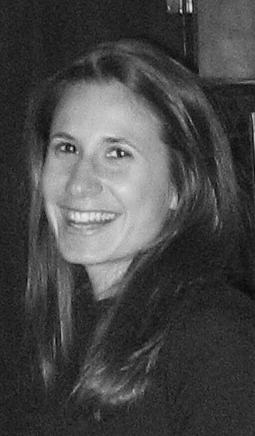
Meet "The Art of Falling" Author Kathryn Craft!


Hi Kathryn,

What an exciting year for you with having your first book THE ART OF FALLING recently released and already going into its second printing, and having a second book WHILE THE LEAVES STOOD STILL due to be released next year.  Congratulations! It is indeed a special pleasure to see “one of our own,” who has been a GLVWG “Write Stuff” Conference Chair herself, experience such an exceptional debut.

KATHRYN CRAFT: Thanks so much Tammy! The book was only six days past its publication date when I found out that it was selling beyond expectation, and that they were going back for the second printing. If my agent and the publisher hadn't already had several back-and-forths on it when I discovered the email thread, I wouldn't have believed my eyes! A dream come true. 

THE ART OF FALLING uses a masterful and brilliant format threading a dual story -- Penny’s present, trying to figure out how to live with her 14 story plummet, and a look at her past and her choices which put her on the balcony that fateful night.  I’m curious, what was the deciding factor which made you tell the tale this way?

KATHRYN CRAFT: I discovered it by accident. My first opening showed Penny out on the ledge about to take the fateful plunge, and due to its high drama I suppose, this incarnation placed third in a state-wide novel opening contest. But I couldn't sustain the tension. The question raised by this incident is "Oh no—will she survive?" The reader turns the page, sees Penny wake up in the hospital, and yep—question answered. Book over.

Important lesson learned: the story question must sustain the reader until the end of the book. And so began the intense period of learning about story structure that resulted in my work as a developmental editor and prompted the Incite Me! workshop I'll be teaching before the conference.

Turns out the fall wasn't the inciting incident: it was waking up afterward, and what Penny decides to do with that. The baker on whose car she landed, her hospital roommate, and the doctors all want to know how she parted from that balcony, but Penny doesn't have the energy or the will to face it—she wants to know how she'll move again, and live up to her disappointing body's zest for life.

At this point I realized I had two strong story questions: what happened to make Penny fall from the very height of her dream career, and how would she make something of this extraordinary second chance from rock bottom? These questions "incited" the story's two story lines, which I then interwove. Only at the end of the book, when Penny has healed, can she face the missing piece: that fall.

An inciting incident is rarely straight-forward. Because it must set up the entire book its facets can be difficult to craft. In the pre-conference workshop we'll take a good hard look at this crucial story element so everyone can appreciate its ability to bind the reader to the protagonist for the length of the entire story.

I find it ironic that your protagonist, Penny, who is easy for a reader to get a deep sense of, never has a physical description written in your book. How did you do that? And why?

KATHRYN CRAFT: Although I employ hints from various characters as to what Penny looks like, I am not big on physical description in general, unless it adds depth to the characterization or pushes along the story line. But since I orchestrated the cast of secondary characters according to their differing relationships with their bodies and food, I do describe them to some extent.

Penny was different. Obviously, since she has an aberrant body image, what she looks like might seem to be of utmost relevance—but she's an unreliable first-person narrator, so we wouldn't be able to believe her anyway. I recognized an opportunity for the reader to enter the story more deeply by contributing his or her own body bugaboos to Penny's body. I look forward to speaking to book clubs and hearing people argue about what Penny looks like! 

In my mind, the Penny that needs expression isn't about the parameters of her body. It's the tender creative core that wants to find its way to the sun—and in that, Penny could be any one of us.

Do you think paying it forward by being a part of the writing community, such as previous board positions with GLVWG and now, the Philadelphia Writers’ Conference and the new Women's Fiction Writers Association, has helped with your writing career? Also, what advice would you give someone new to volunteering and may be shy?

KATHRYN CRAFT: I met my own writing partner, Linda Glaser of Ithaca NY, at the 2005 Write Stuff conference. Linda is far from an extrovert, but knew she needed to emerge from her solitary writer's life if she stood a chance of seeing publication. Her goal was to go to a different regional conference each year and try to meet a few people. That didn't work out so well—she kept coming back to The Write Stuff year after year.

We ran the Friday reception differently back then and I remember Linda strolling in and asking quietly if this was an event tied to the writing conference. I said yes, but apologized that it was only for volunteers. She said, "How can I help?" and I went to get her a name tag. Working side by side we discovered similar interests and agreed on a trial manuscript swap—and the rest is history.

When I ran for my second term as GLVWG president, I overheard someone in the back of the room say, "What is she, a doormat?" I could only chuckle to myself, because here are the facts: thanks to my volunteerism I have tons of friends who are writers and friends who are agents and editors and friends who are published authors that have mentored me in numerous ways in thanks for hiring them; I've had opportunities to be on TV, radio, and speak at libraries; I had the chance to start programs that met my needs for learning craft and networking and reading in public; eventually I learned to the point that I could pass that knowledge along to others through critique and as an independent editor and by teaching my own workshops; my mentoring has earned me loyal readers. All of that made me a better writer, and even more, a writer who understands the publishing business.

I can see absolutely no downside to working alongside other writers to keep our literary community thriving.

It might just be me but I’ve seen more information on beginnings and middles but not as much for endings. I was wondering if we could have a little teaser about your upcoming session LAST WORD ON ENDINGS?

KATHRYN CRAFT: That's what I thought, Tammy, and that's why I developed this workshop. What author hopes that her reader will close the back cover, push the book away, and say, "I was curiously unmoved"? Not me! I don't want to settle for anything less than "joyous," "heart-warming," or "gut-wrenching." A story is first and foremost an emotional experience and I for one want that emotion to fill the reader like a satisfying meal rather than escape with one quick burp.

Here's my teaser: if people are saying your ending falls flat, chances are the main problem lies much, much earlier in the book. ;)

You co-authored THE 7 DEADLY SINS OF SELF-EDITING with Janice Gable Bashman which was published in Writers Digest Nov/Dec 2012 and made their top articles for 2013. Congrats on that too! So out of curiosity, which of the 7 are you most guilty of, and how did you overcome it? 

KATHRYN CRAFT: Tammy, you are the devil herself for asking! I'd say that from the start my main problem was gluttony—overstuffing the story with irrelevant conflict and tension. This was an outgrowth of an early piece of well-intentioned advice I'd heard, that "story is conflict." While it's true that without conflict there is no story, that quote is only part of the picture. I've now learned that story is about a "certain kind of conflict"—and having learned that lesson I am now sensitive to seeing the same issue in other manuscripts.

As a developmental editor at Writing-Partner.com along with running semi-annual writing retreats, what do you find to be the most common mistakes writers make and what advice have you given most frequently?

KATHRYN CRAFT: developed the specialty in developmental editing because of the overwhelming number of issues I see related to the same basic issues of storytelling structure. These issues manifest in predictable ways: fizzling tension, irrelevant conflict that pops the reader out of the story, lack of character orchestration, and a lack of cohesion that only a concerted focus on or subconscious adherence to premise can provide. The writer may have lost interest in her own story! I love nothing more than helping that writer deepen character motivation, raise the stakes, align the structure, and set her on fire to improve her manuscript.

Last question, Kathryn, what is next for you?

KATHRYN CRAFT: Next up is a story I had begun drafting as a memoir about my first husband's suicide during the many periods that The Art of Falling was out on submission. Due out from Sourcebooks in Spring 2015, WHILE THE LEAVES STOOD STILL, is the story of a tense ten-hour standoff between one desperate man ready to take his life and the police, while the three women who loved him most, and the larger community, grapple with how best to find hope. 

Thank you again for doing this interview! And all the best successes your way!

KATHRYN CRAFT: Thanks Tammy!


________________________________________________________
Kathryn Craft is the author of two novels, marketed as book club fiction, from Sourcebooks:The Art of Falling, and While the Leaves Stood Still (due Spring 2015). Her work as a developmental editor at Writing-Partner.com, specializing in storytelling structure and writing craft, follows a nineteen-year career as a dance critic (Morning Call, Allentown, PA). A former GLVWG president and Write Stuff conference chair, she now serves on the board of the Philadelphia Writers Conference and as book club liaison for the Women’s Fiction Writers Association, hosts writing retreats for women, and speaks often about writing. She is a contributing editor at The Blood-Red Pencil blog and a monthly guest at Writers in the Storm with her series “Turning Whine into Gold.” She is a proud member of the Liars Club, a Philadelphia-based group of novelists supporting independent bookstores, literacy, and other forms of paying it forward. She lives with her husband in Bucks County, PA. Representation: Katie Shea Boutillier, Donald Maass Literary Agency. www.kathryncraft.com

_________________________________________________________

Tammy Burke, GLVWG member, 2011 conference chair and past president, has published over 300 newspaper and regional magazine articles and has interviewed government officials, business leaders, everyday folk and celebrities. Currently. she is in the revision stage for her first YA fantasy adventure book, the first in an intended series. When not writing, she works in the social service field and is a fencing marshal in the Society of Creative Anachronism (SCA).

Saturday, February 18, 2012

Katie Shea on finding the right agent

by Kathryn Craft

Katie Shea is an agent with the Donald Maass Literary AgencyShe specializes in memoir and fiction, especially women’s fiction, commercial-scale literary fiction, and realistic YA. In non-fiction she is seeking narrative, food, pop culture, health, and lifestyle.


As of mid-December, I'm thrilled to report that Katie is also my agent! The agent-author interaction is a relationship like any other, but it does start with a bang. You jump right into solidifying a joint vision for your novel, signing a contract, and adopting a plan for revision.


This interview gave me the opportunity to backpedal a bit, and get to know her better.


Kathryn: As a developmental editor, I can believe that reading slush is an education in itself. What are the top five most important things you can pass along to our readers that you learned about good writing while reading slush?


Katie: 1. The first sentence. Catch my eye, Make me want to continue reading your query. Make sure not to be too vain about your work and make sure NOT to tell me that "this is a bestseller." Be real and modestly confident. Believe it or not, I can tell a lot about a writer through his/her query letter.


2. Your pitch. I love a one-sentence pitch. This shows me how the writer sees his/her own project. Can the writer 'sell' their own work?


3. Length. Keep your query short and to the point. A good length is three to four paragraphs. First paragraph: short introduction, one-sentence pitch, word count. Second–third paragraph: short summary, comparative titles, market. Fourth paragraph: writer's bio.


4. A strong writer's bio. I always want to see what the writer has been doing to get to the point where he/she is today. Also, give me something to click on. Your Twitter page, Facebook page, website and/or blog. I want to see how the writer presents him/herself online. Having a positive online presence is always a plus.


5. Font. I really cannot stand when a query is sent in a fancy font. Stick to the standard email font or Times. I read every query from top to bottom, but I am much happier to read it when it’s easy to.


Kathryn: You've said that your favorite genre is memoir. Name a couple of your favorite memoirs, and what you loved about them.


Katie: Ah, memoir. I have loved memoir since I began to read. There is something about how a person can recapture a chapter in his/her life and execute it in a way that is universal and intriguing.


I am a HUGE fan of Joan Didion, whom I began reading when I was in high school. Her writing is real, beautiful, honest, and deep. What I love about her is that she can take the smallest moment in her life and create an ENTIRE book about it. That takes pure talent. Searching for those moments, and then understanding them in a way where you can connect to the mind of a general reader, is something that should be acknowledged.


Other writers such as Jeanette Walls' The Glass Castle and Kelly Corrigan's The Middle Place are great examples of how to take events in your life and be able to create a fascinating story, with a beginning, a middle, and an end. Writing memoir is tough. I believe the smaller amount of time that you include as the span of your book, the better it will be. The first thing I look for in a memoir is if the writer has a complete understanding and strong prospective of this time in their life, and captures moments of their deepest, most purest thoughts throughout. This makes a "good" memoir.


Kathryn: We know that this industry is "subjective" from our rejection letters, lol. But I know from talking with you that subjectivity is more than a sense of "good" or "bad"—it's a sense that a project is "right for you." What creates that sense of rightness, in your opinion? And for those writers who think they'd be happy at this point to have any agent, why is that rightness so important?


Katie: Finding the “right” agent is so very important. When I find a project that seems interesting to me, it normally relates to my life in some way. It can be the voice of the character, it can be an event that takes place, it can be a theme presented throughout the novel, or it can be the setting of the novel. Whatever it is, I must relate to it in some way.


Finding an agent who believes in the original premise of your book is what you are looking for. You want to find an agent who understands your novel. Who understands what the main character is going through. Who understands the audience this will reach out to. These many things need to be thought through when editing, and then eventually sending it to editors. If you and the agent are on different paths, how will this work?


After I read a full manuscript, I think about how much something needs to be changed, where things need to remain, and where things need to be cut. Before I can offer representation to an author, I want to make sure we are in this together. I want to make sure that we can work as a team instead of one person wanting one thing and the other wanting another. Having an understanding about where the novel needs to go is a must in an agent/author relationship. Rejection is the process of finding the right fit.


Kathryn: We met your current boss, Don Maass, at last year's conference, but you've interned and worked at a few different agencies now (Katie’s full bio). What kind of differences exist from agency to agency, and what makes the Maass agency a good fit for you?


Katie: I have gained so much experience working at other agencies to help mold me into the agent I am today. I have watched and learned from many talented agents in the industry— all who work differently. Thus, being an agent is subjective.


The way I see it, the job of an agent is a well-rounded position, combining editorial, sales and marketing, while focusing on my relationship with my clients, the editorial process, communication with editors, negotiating the deal and contract, and the promotion of my clients' online presence.  I have taken the best advice for my career from my fellow industry mentors, yet combined that with my own personal style.


When I came to Don's agency I finally found what I was looking for—creative control and professionalism. Don is a fantastic mentor and boss. He lets you find what you are passionate about and then guides you step-by-step to success. Don handpicks his employees and makes sure we all are in it together. At the DMLA, I continue to learn something new everyday. Just like writers search for agents, agents search for agencies. And when it fits, it fits.


Kathryn: This blog is called ALL THE WRITE STUFF. What do you think the "write stuff" is— those key qualities a writer must have to succeed in today's market?


Katie:
1. Passion.
2. Dedication.
3. Ambition.
4. Talent.
5. Focus.
6. Good listener.

Thanks, Katie! We look forward to seeing you at The Write Stuff.

Wednesday, March 16, 2011

LATE BREAKING NEWS! NEW OPPORTUNITIES!

by Kathryn Craft, Agent/Editor Chair

Folio Jr. agent Molly Jaffa has sent her deep regrets that she will not be able to attend this year's conference. The fifteen conferees assigned appointments with her have been informed of a substitute mode of pitching to her (if you are one of them, and didn't receive the e-mailed notification, please contact us with a correct e-mail address asap).

We'll miss Molly, who had enthusiastically volunteered for other aspects of The Write Stuff as well. Over the course of the past week the conference committee has been busy digging for what opportunities this last-minute turn of events might afford.

And here they are!

Our loss:
Molly's Saturday 8:50 a.m. session, Getting a “Yes!”: From Query to Representation in Ten Steps.

Your gain:
NOW OPEN! Jonathan Maberry and Janice Gable Bashman's highly desired two-hour workshop, Interviewing Techniques And Strategies For Obtaining Expert Help With Fiction & Nonfiction Writing—which quickly filled and has a waiting list an arm long—will now move to Salon A. If you wanted to attend that session but didn't make the cut, you are no longer closed out.

ADDED SPEAKER/NEW SESSION! At 8:50 am, in Room 235, author, attorney, and former literary agent Ann Boyle (bio below) will give Page Cuts: the Query Letter Version. Yes, bring your query letters along! Ann will cover what an agent looks for in a query letter, and what turns her off—then offer feedback on as many letters as time allows. This is a small room, so the session will go to the first 15 conferees to show up. Still learning what the whole querying game is about? No problem—bringing along a query is not a prerequisite.

ON THE MOVE: During the 9:50 a.m. session, Donald Maass's Creating Depth of Character will move to Salon C, and Juliet Grame's Elements of a Bloody Good Crime Novel will move to Room 235. Again, please note that Room 235 only holds 15 people, so if you want this session, please arrive promptly. Kathleen Coddington's Dressing Your Characters, which features costume models (rumor has it this includes conference chair Tammy Burke!), will stay put in Salon B.

Our loss:
Page Cuts panelist Molly Jaffa.

Your gain:
NEW PAGE CUTS PANELISTS! In addition to the roster of Page Cuts panelists already in place, which include agents Sarah LaPolla and Alia Hanna Habib, editor Juliet Grames, publisher Karen Syed, and author/presenters Jonathan Maberry and Janice Gable Bashman, we are happy to announce the addition of thriller author Don Helin; author, attorney, and former literary agent Ann Boyle; as well as fantasy author and attorney Michael Ventrella. Read on for their bios.

A.M. Boyle gave up a 17 year career as a trial lawyer to pursue her love of writing. Having lived at various times in New York, Pennsylvania and South Florida, she now resides in South Jersey with her husband, two kids, and various “fur children.” She has published numerous short stories and other material both in her own name and as a ghostwriter. Her first novel, Turn of the Sentry, was published in 2009, and is slated to be re-released shortly as part of a trilogy. She’s also worked as a Literary Agent for several years, both independently and as part of a firm. Currently, because of her writing projects, she is on hiatus from her literary agency, but hopes to continue with it again in the near future. When not writing and revising, she spends her time doing Missions Outreach for her local church.


Michael A. Ventrella is the author of the fantasy novels Arch Enemies and The Axes of Evil.  He is editor of the forthcoming Tales from Fortannis: A Bard’s Eye View anthology, and his pirate short stories have appeared in the anthologies Rum and Runestones and the soon-to-be-released Cutlass and Musket: Tales of Piratical Skulduggery.  He’s currently working on a novel about a vampire who runs for president. At his website’s blog he interviews other authors, editors, agents and publishers to get advice for the starting
writer. In his spare time, he is a lawyer.


Don Helin is the author of the thriller The Kingdom Come. After graduating from the University of Minnesota, he entered the U.S. Army and served in posts across the United States, and overseas in Vietnam and Germany. After his military career, Don spent a number of years in Washington D.C. as a lobbyist for industry, giving him more material for thrillers. Don used his experience in the Pentagon to create his protagonist, Colonel Sam Thorpe. He is an active member of the International Thriller Writers and Pennwriters.


See you at The Write Stuff next week!

Friday, March 4, 2011

New Write Stuff editor opportunities!

By Kathryn Craft

With the conference almost sold out, Juliet Grames, of Soho Press, still has appointments available. We know why, of course—most of her acquisitions are in crime fiction set in other cultures, and apparently we don't have any authors at present who are targeting that narrow genre.

Since Juliet's background in publishing and bookselling has so much to offer us, we've decided to do something about that.

To best serve our conferees who do not yet have agent/editor appointments, and to make the best use of Juliet's time and expertise, we are now opening up her appointments to the following additional consultations:

Literary fiction and memoir.
Juliet writes:
Sorry if I wasn't clear--I DO acquire literary fiction, and also memoir. I just also acquire a very specific kind of crime. And the ratio of titles is really about 1:3, litfic:crime. If you want an idea of some of the books I've bought, I'll post a couple literary fiction deals announcements here.

(World English) Fuminori Nakamura's THE THIEF, winner of the prestigious Oe Prize, the story of a virtuoso pickpocket who is drawn into a web of intrigue in the Tokyo underworld, to Juliet Grames at Soho Press, by Kazuto Yamaguchi at Kodansha, for publication in early 2012.

ROCK PAPER TIGER author Lisa Brackmann's second novel, a literary thriller about an American woman who stumbles into a dangerous circle of spies and cartels in Puerto Vallarta, Mexico, to Juliet Grames at Soho Press, for publication in early 2012, by Katherine Fausset at Curtis Brown (world English).

THE SPANISH BOW author Andromeda Romano-Lax's THE DISCUS THROWER, about a young German art dealer sent to Italy in 1938 to collect a famous statue for the Fuhrer, pitched as compared to REMAINS OF THE DAY, to Juliet Grames at Soho Press, for publication in 2012, by Gail Hochman at Brandt & Hochman.

Individual ten-minute consultations on the publishing/writing subject of your choice.

  Possibilities include:
  • People who will be ready to pitch next year (they don't have a finished manuscript) but would like to practice pitching this year, and get feedback from a pro.
  • People who'd like to get a sense of the commercial viability of their project, or want to ask for an insider's perspective on how to make it more so.
  • People who'd like feedback on their query letter.
  • People who are stymied by a writing challenge and seek advice. 
  • People who might be interested in learning more about how the publishing industry works.
Keep in mind that you'll still only have 10 minutes, so have your material/questions ready.

How we'll do this:

Dianna will give appointments to the first "X" number of e-mails she receives ( X = number of appointments still available). Please put "JULIET GRAMES" in the subject line. You need not tell us what you want to use the appointment for; we'll trust you'll come up with a good idea.

To reduce work on Dianna, who has held up so beautifully to the rigors of registrardom that we'd hate to crack her now, you will only hear back if your appointment has been granted. If you don't hear back, you can assume you were too late.

Please take advantage of this amazing opportunity! On your mark, get set...

...e-mail Dianna!


Tuesday, March 1, 2011

A Write Stuff Checklist/What do you write?

by Kathryn Craft

It's been a year in the making but now that it's almost here, it's hard to believe we're now accepting our final few registrations. Just one month from today, the 2011 Write Stuff conference will be over!

As you prepare your personal countdown to The Write Stuff, here's a handy checklist you can use. If you have other ideas, feel free to add them in the comment section.

Ahead of time:
1. Make Final Quick Fixes to your manuscript (we writers are never done fiddling!).
2. Choose desired sessions to free up networking time on site.
3. Research your agent or editor (check previous blog posts for additional links and info).
4. Write/rehearse pitch if meeting with an agent or editor.
5. Write 100-word flash contest entries (fiction, poetry, or creative nonfiction).
6. Make business cards (some authors put their title and brief pitch on the back).
7. Contact Tammy to donate a raffle book.
8. Figure out your “brand” (see explanation, below).
9. Moderators: write intros.
10. Ask Tammy: How can I help?

Bring:
1. Business cards.
2. Query letter, if desired (some agents are actually relieved to be able to read your pitch).
3. Flash Contest entries (14-20 pt font, name/category on back).
4. Bring any giveaway table items (book marks, flyers, brochures for writing-related services).
5. Maass/Rector workshops only: full manuscript, either printed out or on laptop.
6. Page Cuts: Bring print-outs of 4 first pages, 4 (100-word) synopses.
7. Questions.
8. Your A-game!

At conference:
1. Try out pitch at informal Thursday Writer’s Cafรฉ.
2. Moderators: introduce yourself to the speaker you'll introduce at the cocktail party.
3. Dress nicely (business casual), in layers to accommodate a range of room temperatures.
4. Drop off flash entries before 8:30 a.m. Saturday.
5. Drop off giveaway table/raffle items.
6. Ask everyone you meet: What do you write?


Sometimes the networking you can accomplish with other writers is the most valuable long term take-away from the conference. When Linda Glaser of Ithaca, NY decided to try out our conference in 2005, she volunteered to help us accomplish some last-minute tasks—and after a post-conference manuscript swap, I found not only a friend, but a writing partner perfectly suited to my work and style. We've been swapping ever since.

Keep in mind that if you're going to ask everyone you meet what they write, you have to be prepared to answer the same question. But coming up with your personal brand isn't always easy. Many of us have a variety of genre interests. How do you succinctly describe what it is you write?

In the March/April 2011 issue of Writers Digest magazine, writer Gigi Rosenberg cites an exercise included in Priscilla Long's The Writer's Portable Mentor:
Long advises writers to make a chronological "List of Works," starting with the very first poem, essay, novel or other piece you ever wrote. You only need to have completed a first draft of the work to qualify for the list.
Rosenberg says that when she did this assignment, she discovered that her 14-year-old, 21-year-old, and 35-year-old selves had all been exploring the same themes and concerns throughout her life. It sounds like a great approach, and reminds me of something bestselling romance author Shirley Jump told us at a GLVWG meeting many years ago. Shirley shared how excited she got when some of her writing friends helped her realize that she wrote "sweet romantic comedies." She had never thought of herself as particularly funny, but the description felt right. Suddenly, Shirley told us, it was so much easier to describe her work to others! It also helped her stay on track in her career as an author, even while occasionally genre-hopping.

So with your checklist now in hand, I look forward to seeing all of you fully prepared writers at the conference. And when we meet at the Four Points Sheraton, I'm pretty sure you can guess what I'm going to ask you!

Countdown to The Write Stuff: 23 days!!!

Monday, January 10, 2011

Meet Publisher Karen Syed

By Kathryn Craft

Karen Syed, Publisher at Echelon Press, is becoming quite a friend of The Write Stuff conference. In her last few visits with us she has signed authors Kieryn Nicolas, Jon Gibbs, Ralph Hieb, and Carla Veno Jones.


About Echelon Press
Echelon Press is a small independent publisher of trade paperbacks and e-books. Its divisions include Quake (young adult), Explorations (SF, Fantasy, Horror) and Shorts. General submissions are for electronic publication only; titles for paperback publication are acquired by invitation only. The most effective way of securing an invitation is by in-house author referral, or by meeting with Karen at The Write Stuff!

What they are looking for: They accept queries in all fiction genres, including romance, mystery (including cozy, hard-boiled, police procedural, noir), thrillers, westerns, inspirational, women's fiction, historical, young adult, science fiction, fantasy, horror, novellas, and short fiction. Submissions must include a detailed marketing strategy.

What they are not looking for: Erotica, non-fiction.

About Karen Syed

Karen Syed is the president and COO of Echelon Press, LLC. Every day is a new success story for her as she continues to grow along with her business. She has seen seven of her own novels published (writing as Alexis Hart), along with numerous articles and short stories. As a former bookstore owner, she garnered a nomination from Publishers Weekly for their Bookseller of the Year award. She is committed to helping and encouraging everyone she comes in contact with to seek a healthier and more positive quality of life by reaching for their dreams. Her newest fascination is Steampunk, which is feeding her minor obsession with the Victorian era. She is currently embarking on her own Steampunk series, Petticoat Junction

For more on Karen
Check out some of her blog posts:

On what to do and what not to do when seeking a publisher.

On what makes a good author.

On e-books, and musings about J.A. Konrath.

On "Why I Do This," featuring GLVWG's Kieryn Nicolas.

Sunday, January 9, 2011

Meet editor Juliet Grames

By Kathryn Craft


When Juliet Grames last came to our conference, in 2008, it was as Editor at Overlook Press. This year she will represent Soho Press, where she is the Crime Fiction Editor. Soho Press was last represented at our 2005 conference, by co-founder Juris Jurjevics.


About Soho Press
Soho Press is an independent book publisher based in New York City. They publish a superior roster of hardcover and softcover trade books that are primarily publishes fiction, with the occasional autobiography or cultural historical account. Completed manuscripts should be 60,000 words or more. While many of their published works arrive here through agents, they place a high priority on publishing quality unsolicited materials from new writers. Authors on the Soho Press backlist include Oprah winner and National Book Award finalist Edwidge Danticat, Sue Townsend, Maria Thomas, Jake Arnott, Stephen Fry, John L'Heureux, Delores Phillips, and Jacqueline Winspear. 


What they're not looking for: Though eager to accept a wide range of literary fiction, they do not consider formula fiction, young adult dramas, stock romances, juvenile literature, short story collections, cookbooks, how-to books, self-help, fantasy, and anything that might recommend itself as a "quick read."


Click here for recent releases.


About Juliet Grames
Juliet is Editor at Soho Press, where she acquires and edits for the Soho Crime imprint. Now 20 years old, Soho Crime specializes in mystery and crimes series set in other countries and cultures. At Soho Crime, cultural components and rich atmospheric settings are almost as important as the mystery itself. If you have a great mystery—preferably the first in an envisioned series—set in a locale outside of the United States, and whose detective or amateur sleuth is native to the locale in question, you should definitely let Juliet know!


In August, after I invited her to the conference, Juliet wrote back:


I would just LOVE to attend! I think you already know how much fun I had in 2008 with you guys.
Just to give you a feel of my new landscape, Soho is freakin' awesome. We do half crime fiction, half literary fiction, and we do acquire from unagented authors. So I'm happy to do pitch sessions, etc. I'm personally the crime specialist here—I do all the crime acquisition and curating—so if you'd like a crime workshop, or some other talk, etc, I am very happy to do one.

And with that, her 2011 Write Stuff session, "Elements of a Bloody Good Crime Novel," was born.


We asked Juliet:

In what ways does your past experience as a bookseller inform your work as an editor? 
I think all editors should work in bookstores at some point—it gives you a great idea about what categories are being sold in retail stores, who buys what, which genres move the most copies, which covers customers react well too, what people are buzzing about. I simply can’t imagine not having that experience before starting in editorial! But I’ve seen it happen where really top-notch editors buy books that end up flopping because there’s no good category for them in bookstores. That’s a mistake a former bookseller would never make!

What is your favorite aspect of your job, and why?
I’m kind of a dork about editing. I love to edit. I love taking something that’s 80% perfect and making it 100% perfect. I love working with authors, exchanging ideas, and collaborating as a team to reach a goal. It’s just so satisfying. Creative people are also generally wonderful people to work with, and I feel really blessed to maintain friendships with authors long after books are published.


For more about Juliet

To get more of a sense of Juliet, check out this letter she wrote to her new company back in May. If you click on the link at the end you'll learn more about Soho Press as well:

Dear Soho Press,
It’s me here, Juliet Grames, your new editor. You know, the one who just started. So I know it’s not exactly elegant for me to come out and say, but I’d better just put it out there, lest it nag at our blossoming relationship. So here goes.
I have a big crush on you.
There, I said it.
It’s true–I’ve had a crush on you for a while, ever since I read my first Soho book... (read more)


Get to know Soho better through Juliet's blog entry about Rock Paper Tiger, a recent release by Lisa Brackman:


Soho publishes two new hardcovers a month: one international detective novel for Soho Crime, and one literary novel or memoir for Soho Press. When I started in May, Ailen, the Marketing Director, slipped me a shiny new copy of Lisa Brackmann’s Rock Paper Tiger, the story of Ellie, a 26-year-old Iraq vet living in China... (read more)

Saturday, January 8, 2011

Meet literary agent Alia Hanna Habib

By Kathryn Craft

About McCormick & Williams
McCormick & Williams is an independent literary agency specializing in literary and commercial fiction and quality non-fiction, including memoir, history, narrative, biography, lifestyle, sports, self-help, and pop culture. Devoted to representing authors at every aspect of successful publishing, their agents are closely involved in each stage of a project, working in tandem with authors to develop ideas, craft proposals, and edit manuscripts to achieve the best marketplace results. Looking beyond the immediate deal, they make certain that their authors are well-served throughout the publication process, with a hands-on approach to editing, design, publicity, marketing, and sales. And as an agency built on the talents and promise of their authors, they take an active role in career management, helping their authors reach their widest possible audience through all available avenues, including magazine writing, lecturing, and the sale of foreign, film/tv, and subsidiary rights throughout the world. Check out some of the recent titles they represented.

About Alia Hanna Habib
After graduating from Barnard College, Alia Hanna Habib began her publishing career at Houghton Mifflin as a publicity assistant to the Director of Cookbook Publicity. There, she says, she "discovered two unexpected loves: cookbooks and breaking out new talent." From reading cookbooks, she learned to cook, and after reading the manuscript of Everything Is Illuminated by Jonathan Safran Foer, she volunteered to work extra hours to help with the publicity campaign. In 2002, she left Houghton to pursue a graduate degree in nineteenth-century British literature. After graduate school, she lived in Italy, where she volunteered on organic farms throughout the Italian peninsula. On returning to New York, Habib was re-hired by Houghton Mifflin Harcourt as a publicity manager. Some of her most notable campaigns include How We Decide by Jonah Lehrer, Whatever It Takes by Paul Tough, Mrs. Astor Regrets by Meryl Gordon, Finding Nouf by Zoรซ Ferraris, and Hello, Cupcake! by Karen Tack and Alan Richardson. Habib is now a literary agent at McCormick & Williams in New York City. She lives in Brooklyn and says she still loves to cook.


What she represents: Narrative non-fiction, memoir, and cookbooks, as well as the occasional novel that strikes her fancy (among them, literary fiction and mysteries).


For more about Alia:
Interview in ASJA Monthly [expanded bio information above is excerpted from this interview by Barbara DeMarco-Barrett] that includes how Alia uses her publicity background as an agent.


Have a subscription to Publisher's Marketplace? You can see Alia's most recent deals here.

Friday, January 7, 2011

Meet literary agent Katie Grimm

By Kathryn Craft


About Don Congdon Associates
Early in his career as a literary agent, Don Congdon developed an enviable reputation as a skilled editor, tough negotiator and shrewd judge of talent. While still a young editor at Simon & Schuster, he championed the early stories of Ray Bradbury (you may have heard of him!), who became one of his first clients after he became a full-time literary agent in 1947. “I married Don Congdon the same month I married my wife,” Bradbury said in a speech to the National Book Foundation in 2000. “So I had 53 years of being spoiled by my wife and by Don Congdon. We’ve never had a fight or an argument during that time because he’s always been out on the road ahead of me clearing away the dragons and the monsters and the fakes.” Bradbury dedicated his novel Fahrenheit 451 to Congdon. In 1983 Congdon started his own agency, Don Congdon Associates. He died in 2009 at the age of 91, and since then the agency has been run by his son, Michael. The agency represents over one hundred authors, many of whom have appeared on best-seller lists and have won numerous awards, including: Pulitzer Prize and George Polk Award for Journalism winners Russell Baker and Edna Buchanan; National Book Award recipient Ellen Gilchrist; New York Times Best Seller Kathryn Stockett (The Help); James Thurber Prize winner David Sedaris; and Edgar and Grand Master of Horror award winner Richard Matheson.

About Katie Grimm
Katie Grimm joined Don Congdon Associates in 2007 and is a member of the AAR and SCBWI. A self-described "insatiable reader," she worked in a library before starting as the agency's literary assistant/office manager. She is now building her own list.

What she is looking for: Vivid literary fiction, transportive historical fiction, up-market women’s fiction, cohesive short story collections, lurid mysteries and thrillers with exotic or historical settings, high-concept young adult, and middle grade with heart and humor. Most importantly, she hooked by fiction with emotional resonance and longevity, and in her opinion, this requires an authentic voice, relatable characters, and a twisting plot that keeps her intrigued. For non-fiction, she is looking for offbeat narrative non-fiction, history, memoir with distinct voice, multi-cultural, and counter-culture.

What she is not looking for: Romance, high fantasy, adult speculative fiction, hard sci-fi, thrillers with terrorist plots, how-to, or inspirational.

For more about Katie:
Interview at Chuck Sambuchino's Guide to Literary Agents blog that includes why she loves "surprising protagonists."

Interview at WordHustler including what she likes in a query and why she loves YA/MG.

Interview at Middle Grade Ninja that includes her favorite books, movies, and shows and a description of her ideal client.

Thursday, January 6, 2011

Meet Literary Agent Blair Hewes

By Kathryn Craft

In addition to listening to pitches and participating on our agent panel, Blair Hewes of Dunham Literary, Inc. and her good friend, literary agent Katie Grimm of Don Congdon Associates, will co-lead our Friday night session on how to pitch to agents and editors, which they've titled "Tuning Your Pitch: The Essential Notes."

There's business to their relationship as well: Dunham Literary, Don Congdon Associates, and the Denise Marcil Literary Agency have formed an alliance so they can share office space and combine back office activities. Their companies and their decisions about representation, however, remain separate. What you need to know: it's fine to submit query letters to all three agencies.

Here's some more about Blair and her agency.


About Dunham Literary
Jennie Dunham has been a literary agent in New York City since May 1992. She started her career at John Brockman Associates and then Mildred Marmur Associates. She was employed by Russell & Volkening for 6 years before she left to found Dunham Literary, Inc. in August 2000. She has been a member of AAR (Association of Authors Representatives) since 1993. She served on the Program Committee and was Program Committee Director for several years. She attended international meetings as the AAR representative to create the ISTC (International Standard Text Code) which is being created to ISO (International Standardization Organization) specifications. This business and tracking system will be based on titles not book formats (as is the case with ISBN) and will work in tandem with ISBN.

About Blair Hewes
Blair Hewes is a member of the Association of Authors’ Representatives and serves on their Program Committee. She is also a member of the Society of Children’s Book Writers & Illustrators.

What she's looking for: Literary and commercial fiction, narrative non-fiction, and books for children of all ages. Whether for children or adults, she believes it is important to provide books for both the reader actively looking to expand his or her mind and the one who simply wants to be swept up in a good story, but a truly exceptional book accomplishes both aims together. She is also interested in representing authors of non-fiction books in the categories of pop-culture, historical biography, lifestyle, and women’s issues.

What she's not looking for: Westerns, hard boiled crime fiction, horror, or political or medical thrillers. Says Blair, "While I love a book with a romantic element, I don’t do genre romance."

Read a blog post by Blair's satisfied author Bettina Restrepo, who calls Blair "the person she didn't even know she was hoping for."

Monday, December 13, 2010

Meet literary agent Molly Jaffa

by Kathryn Craft

Young adult (YA) and middle grade (MG) continue to be hot, and Folio Literary Management knows it. That's why they've created a new division, Folio Jr., to target this important market. One of Folio Jr.'s four agents, Molly Jaffa, will be at our conference to hear pitches and to give a session specific to YA/MG authors, Getting a “YES!”: From Query to Representation in Ten Steps. 


About Folio Literary Management
A full-service literary management company in New York City since 2006, Folio Literary Management places both fiction and non-fiction with major publishers throughout the U.S. and around the world. They represent many first-time authors, some of whom have gone on to become bestsellers and major award-winners. Folio also represents many well-established authors, and works closely with them to take their careers to new heights. Client Garth Stein's novel told through a dog's point of view, The Art of Racing in the Rain, has been on the bestseller lists for 73 weeks and counting. Folio is proud to offer a full complement of literary services in a changing publishing landscape, and provide their clients with access to marketing services, website development, and the media training it takes to make each book a success. They are dedicated to supporting authors across all platforms, from film adaptation to enhanced e-books and apps.

About Folio Jr.
Folio Jr. is the division of Folio Literary Management devoted exclusively to the representation of today’s most stellar children’s book authors and artists. Folio Jr. agents are wholly committed to offering their clients 360ยบ of impeccable, hands-on care. They strive not only to find the most un-put-down-able new voices as well as to find the most can’t-take-your-eyes-off-it new styles of illustration, but also to guide their established writers and illustrators to new heights in their publishing careers. For a list of Folio Jr. Clients, click here.

About Molly Jaffa
Molly has been with Folio Literary Management since 2008. As the agency's Subsidiary Rights Associate, she aggressively pursues the sale of Folio clients' audio and foreign rights, helping to grow their careers in as many formats as possible. Molly is actively building her own client list as part of the launch of Folio Jr., an initiative within the agency devoted to children's and YA titles. An “editorial agent,” Molly works closely with clients to make their manuscripts as strong as possible.

What she is looking for: Molly is particularly interested in voice-driven, high concept MG and YA fiction; projects with elements of magical realism or historical fantasy; characters who have strong passions, smarts, or skills; and books that open up a rich new world (real or imagined!) for the reader to discover.

What she is not looking for: Picture books, boy books (no gross-out humor, aliens, gore, etc.), and paranormal fantasy.

To read more about Molly:

Interview at E.I. Johnson's blog "A View from the Top," where Molly says "it's all about the voice."

Interview at "Mother. Write. (Repeat)." blog, in which Molly shares her agenting philosophy, and the difference between magical realism (which she likes) and paranormal romance (which she doesn't).

Another take on what Molly represents.

Monday, December 6, 2010

Meet literary agent Adam Friedstein

by Kathryn Craft


A great way for a rookie author to gain literary representation—beyond having a top-notch novel or nonfiction proposal—is to query a newer agent at an established literary agency. It's a "best of both worlds" scenario: you get in on the ground floor with an agent who is working hard to build his list and establish himself in the industry, while benefiting from the agency's reputation and combined experience.


The agents coming to the 2011 Write Stuff conference fit this description perfectly. One of them is Adam Friedstein of Anderson Literary Management.


About Anderson Literary Management
Anderson Literary Management is the culmination of Kathleen Anderson’s three decades of publishing experience, thirteen of those years as an agent, seventeen as an editor. In 1995, she made the unorthodox decision (at the time, which is commonplace now) to “jump the fence” and leave institutional publishing for the entrepreneurial world of agenting. The decision was prescient because, in fairly short order, her authors gained international reputations on the back of her established tenure as an editor. It was a liberating move, allowing her to become more closely aligned with the discovery of authors and manage their artistic development. Her literary acumen attracted writers of all stripes without the restrictions of working for a single imprint of a publishing house. Now ALM represents authors to the industry as a whole. Their projects are roughly 50% fiction, 50% nonfiction.


The agency's philosophy: "We are committed, spunky, empathetic communicators, representing authors who are truth-tellers as well as story-tellers. We foster long-term relationships based on integrity, sound business practices, mutual respect, and companionship. We represent authors, not books – meaning, we manage and nurture the careers and ideas of writers over many books, not just on a book-by-book basis – and we remain active as partners throughout the publishing process. We orchestrate publishing and media deals worldwide involving factors both personal and professional, because matching writers with the right people to publish, film, and stage their work is our key to their success."


About Adam Friedstein
Adam Friedstein of Anderson Literary Management grew up on the North Shore of Massachusetts and holds a B.A. in Comparative Literature from Bard College. He began his publishing career in 2005 at Writers House, later going on to the foreign rights department at Harold Ober Associates, and most recently Trident Media Group where he worked with agents Ellen Levine, Alex Glass, and Melissa Flashman and authors such as Christopher Andersen, Russell Banks, Stanley Fish, and Matt Bondurant. 


What Adam is looking for: Books that make statements, books with captivating characters and loud voices, books with unique perspectives on the familiarity of adolescence and adulthood, specifically debut literary fiction, literary thrillers, young adult fiction and narrative and serious nonfiction, including memoir, popular science, and pop-culture books.


More about his interests in "serious nonfiction": In addition to other categories mentioned above, this includes biographies, histories, extrapolated critical essays, travel books, idea books in technology, politics, education. Books researched and written by authors with appropriate qualifications. 


More about his interests in YA: Historicals; "I like YA on the darker, older side as well—quirky stories that remind me of the pathos of adolescence in a creative way."


What he's not interested in: Celebrity memoirs, or prescriptive dating and weight loss books. He also admits to never having been a big sci-fi or fantasy guy.


Read an interview with Adam at Chuck Sambuchino's Guide to Literary Agents blog.


Friday, April 2, 2010

It's a wrap!


From Write Stuff co-chair Tammy Burke, keynote Jim Frey, and chair Kathryn Craft: thanks to everyone who turned out for our 2010 conference! Thanks, too, for supporting this inaugural year of the blog.


I (Kathryn) promised you a wrap-up here and an opportunity to post your favorite conference moments in the comments section. Sorry it took so long! Took me a week to whip my requested agent submission into final shape (yay! hope renewed!); I'm sure there are others of you at home doing the same thing.


Thank you for the mad flurry of congratulatory notes in those few first days after the conference. Most appreciated. But now let's get to the important stuff: the stories!


Every good story starts with a character at the extreme end of the bell curve, we learned from our "How to Plot Like the Pros" workshop leader Jim Frey, and in his own persona Jim provided a great character for the story of this year's Write Stuff conference. As for plot, the dialectic would go something like this: "the wannabe author insists on writing by the seat of her pants" meets opposition by Jim Frey—"that's not going to work"—creating a new situation in which the wannabe author embraces outlining, and actually feels that writing a salable novel within a reasonable time period might be possible.


More than half of the 70 evaluations returned to us listed one of Jim's sessions as their favorite--an unprecedented majority, considering our group represents all kinds of nonfiction writers and poets as well. Yet Jim did not exemplify the slick promotional package that is today's successful author.


Admitting to having lost his comb in the 1970s, Jim more often came across as a gruff old mountain man ("Oh no," I heard the What Not to Wear crew say, "that plaid flannel over-shirt is all wrong with those pants!"). But just when you thought you had him pegged, he'd say something unexpectedly tender. His comment during the keynote about why we write—to transform ourselves—had me suddenly close to tears.


But Jim was only part of the conference. Molly Cochran and Jordan Sonnenblick also wowed, and every other speaker was either noted as a favorite or remarked upon kindly in our evaluations. But the conference isn't just about the sessions—a lot of networking and informal conversation creates memorable moments, too. What are some of your favorite 2010 Write Stuff moments? I'll get the ball rolling here, then add my own comment. Please follow suit! We all had different experiences, and will be the better for sharing them. That's what the Write Stuff spirit is all about.

Kathryn's favorite Jim Frey story:
After his morning session on Saturday, "The Power of Knowing Your Premise," Jim pulled me aside in the hallway to review his schedule for  the rest of the day. Keep in mind he was asking me after two full days of his workshop, and after the hubbub of the conference was well underway—my brain was already "Freyed." So I went to look up his schedule in my notebook. He said, "Don't bother, I have it here [he flips through his clipboard]...I think it's the keynote, right?"

Sounded good to me. As he walked away from me down the hall, affording me a great view of that unkempt hair, I heard him say, "Good. I have to go to my room and write a new keynote. I used up all my material in that last session."

I hadn't yet stopped laughing when Dianna breezed down the hall. Jim must have just missed her. "Do you know where James Frey is?" she asked. I told her he was in his room, rewriting his keynote. And she said, "Room 235 is full of people waiting for his informal genre chat."

Oops.

I called Jim in his room, told him about the mix-up, and he immediately headed for Room 235—and led a genre chat that at least one participant would remark was her favorite session of the entire conference. Following that, with no planning session remaining, Jim delivered a keynote from handwritten notes that many would consider the highlight of their conference.

Please leave a comment: What was your favorite Write Stuff moment?

Saturday, March 20, 2010

Molly Cochran on the art of writing and the science of finishing, part 2

Taking a cue from Molly Cochran, whose Write Stuff session is “Finishing Your Novel,” I thought, what the heck? We should finish our interview. To that end…

Kathryn Craft: During the brainstorming process for your presentation topic, you put forth that selfishness can be an important attribute for attaining success in today’s publishing world. Why is that?

Molly Cochran: Correction. Not today’s world, and not the publishing world. Just the WORLD. Artists are SELFISH Yes, yes, yes! Oh, how women hate that word!

Actually, my original topic was “The Selfish Writer,” but you asked me to modify the title, since you feared the session's marketability; no one wants to think of him/and especially herself as selfish. But here’s the truth: Artists have to be selfish. We must be, because otherwise we would not be permitted to create art (and yes, your unimportant little novel which is constantly pre-empted by Junior’s Little League practice IS ART). Every one of us is told sooner or later to go get a real job. The fact is, writers have to respect their work enough to give it the attention it deserves. If you only write when there’s nothing better to do, then your work doesn’t mean enough to you. I hate to say it, but you really don’t deserve success.

What is success, anyway? Only an idiot would think it has to do with how much money you make, and if that’s all you care about, then I’m not even talking to you. This isn’t a job; it’s a lot more than that. I don’t even think of my work as coming from me, particularly. It’s bigger than me. It’s demanding. It’s hungry. It’s harsh. My choice to live as an artist constantly breaks my heart, wanting so much from me and sometimes giving me so little in return. But I’ve learned that I can’t be happy without writing. I don’t even think I can live without it.

So I don’t think that serving one’s talent — one’s art, or whatever you want to call it — is selfish. And if it is, I don’t care.

K: Your published works represent a range of genres, from nonfiction (DRESSING THIN) to fantasy (THE FOREVER KING trilogy, WORLD WITHOUT END) to spy novels such as the Amelia Pierce books written under the pseudonym Dev Stryker. What are you working on these days?

M: I have a book with my editor at Tor titled THE PAGAN TRAILER PARK, about a 50-year-old writer who, in an attempt to survive a divorce and the death of her only child, allows the main character in the book she’s writing to take over her life, with some surprising results.

I’ve also written something entirely new, a paranormal YA novel I call WONDERLAND, about a bright, articulate 16-year-old girl who finds herself in a town filled with witches who have all sorts of special abilities that both help and hinder her as she seeks to unravel the mystery of her mother’s suicide.

I use the term “YA” like I know what I’m talking about, but actually, I didn’t write WONDERLAND as anything except a story with a young narrator. The whole YA genre is weird and new to me. Different editors, different agents. I’ve written outlines for two sequels. I figure that after they’re completed, I’ll know whether or not I want to stay on this track.

As for the future, I’ve been working for some time — years, really, there’s so much research involved — on a novel based on the life of my Japanese grandfather. Every event in his life was shaped by women: his Samurai mother and grandmother, his affair with an Australian free-thinker, his first marriage, arranged by his parents and doomed to misery, the daughter that his mother gave away to a geisha house, his beautiful, aristocratic second wife who dies tragically, his housekeeper, who keeps his large family alive through WWII by using her wit and peasant resources, and his daughters, who have all sorts of adventures of their own. Lots of material there.

And as for the past: Some of you may know that I took rather a long hiatus from writing. I don’t know why. Instead of writing, I traveled, ruminated, wrote a lot of notes for projects I didn’t begin, felt bad about getting divorced, cooked, moved around a lot… wasted time.

I regret it. I can’t get that time back. But then, maybe I needed to take the time, too. I don’t know anything anymore, except that I missed writing. It kept me — I don’t want to say sane — connected. Connected to something beyond myself. I’m not religious. It wasn’t God. But it was something that I needed, and need every day.

So I’m writing again. Starting over, sort of. But don’t we all, always, with every book, start over from the beginning? That’s the nature of art, I think, and artists: Constantly reinventing the world and ourselves through this lonely, terrifying, fascinating journey of the mind. Our books are the notes we take. Sometimes people want to read them, to share our journey.

That is the whole point.

Thank you to Molly, all of our presenters, this year's blog contributors, and to the more than 2500 of you who made the inaugural year of ALL THE WRITE STUFF a success! This is the last planned pre-conference post. Not a bad idea to check in here before you leave for the conference for any last-minute announcements, but barring those, please return after the conference—I'll write one last wrap-up post. And, since our experiences will differ, please leave comments, lessons learned, and interesting vignettes about the conference to share with others!

James Frey "How to Plot Like the Pros" workshop starts in 5 days!
Write Stuff 2010 starts in 6 days—see you there!